

So Much Discussion Around What The Youth Needs… But Are We Asking Them?
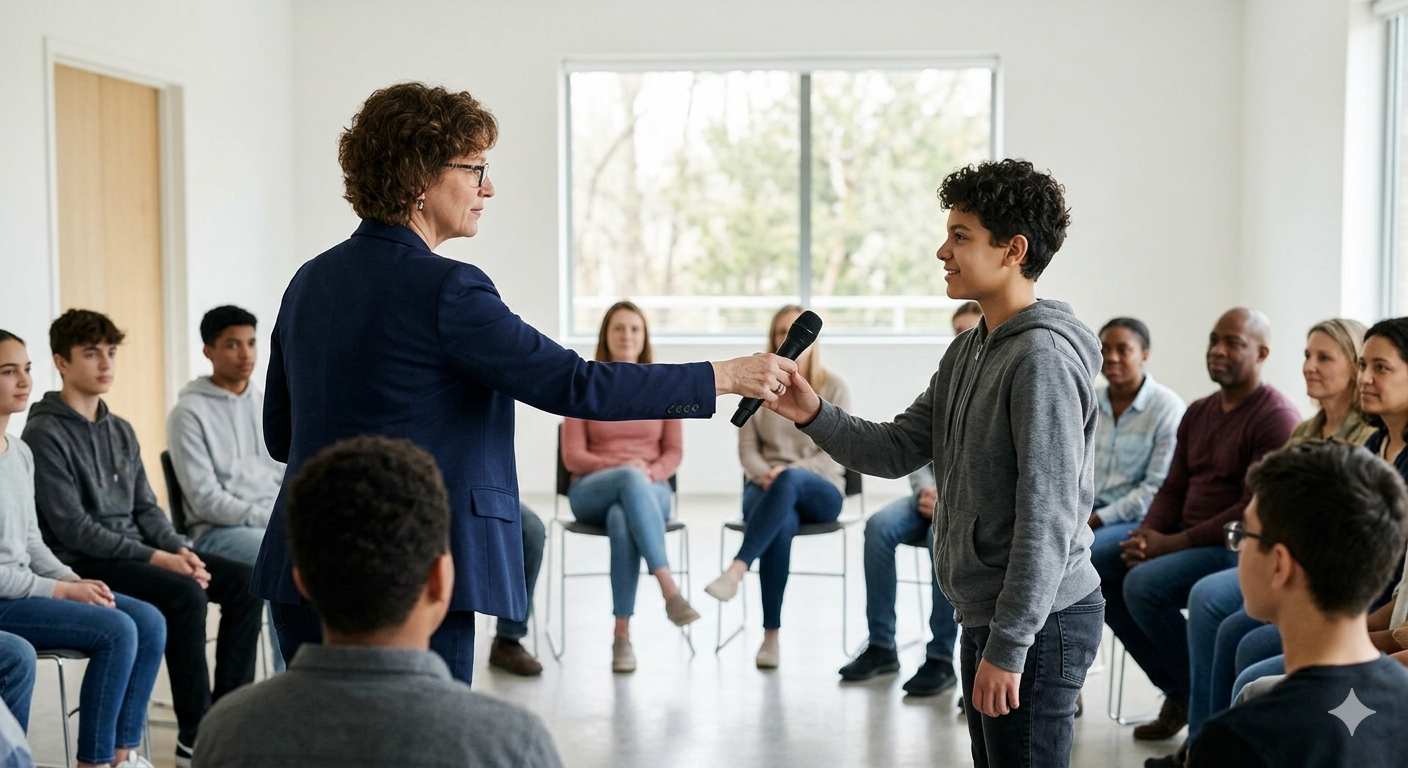
When was the last time you read something about what we think is good for our kids, prescribed by us? Whether this is screen time, social media bans, or guidance on how they need more support with X, Y, or Z. I’m not suggesting we shouldn’t have these conversations, but are we sure these are the right things we are talking about? Is all this guidance really based on what youth are telling us, or what we are surmising?
I come at this question from my own perspective. As part of my work, we have created an intentional third-space event for parents and youth to come together. At first, my colleague Jennie and I designed this event based on what we thought youth needed. Looking back, I realise how much we were assuming. We didn’t ask first, and that’s the mistake we need to avoid. We hopefully weren’t wrong, because disconnect - the core behind what we do - is a universal subject that affects us all. But did we invest lots of time finding out the perspective of the youth on this? No.
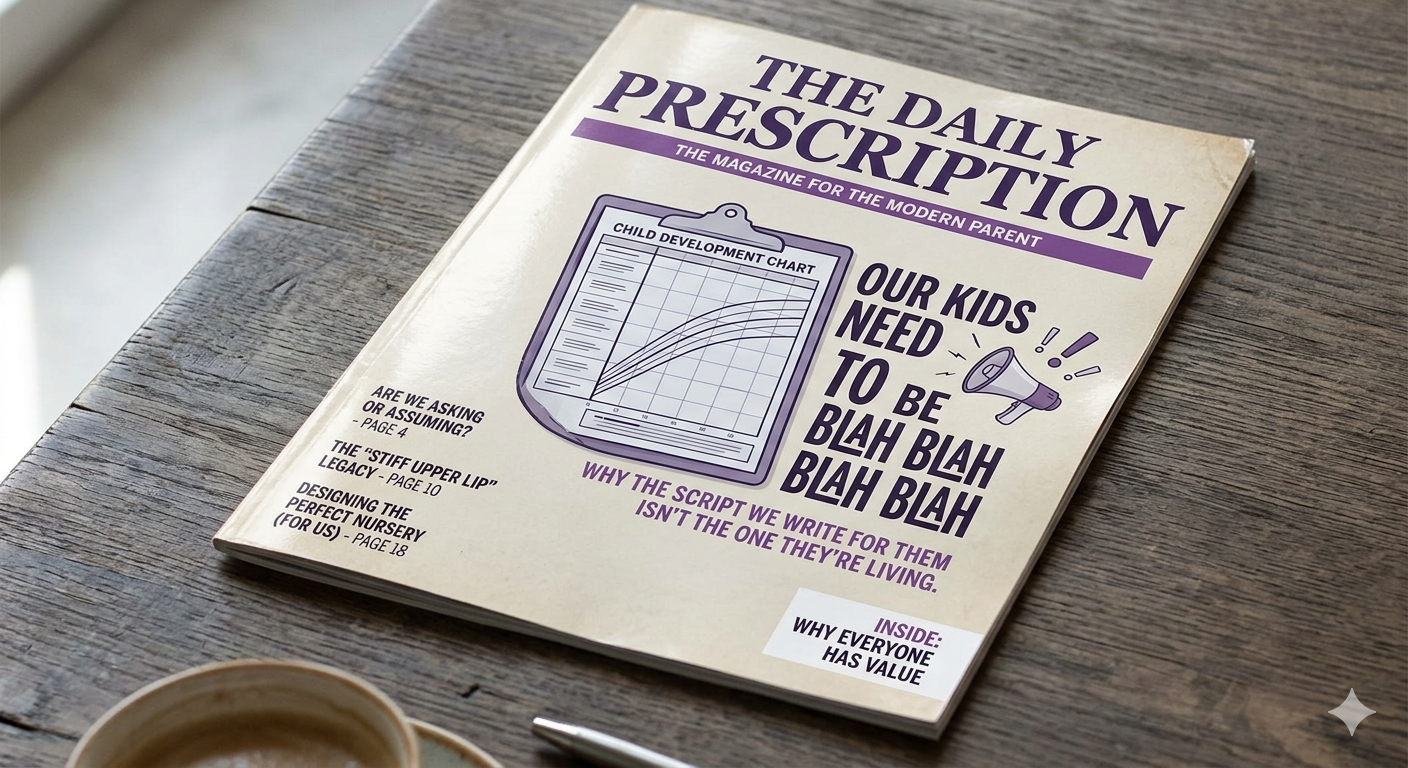
And why didn’t we? Maybe it was time constraints, maybe just blindness to what was right before our eyes, maybe we couldn’t get access to these youth voices. Being involved in research or collaborating on a societal project isn’t often seen as fun, and more importantly, youth are probably unaware of the importance of raising their voices.
Speaking to Dr Rebecca Raeside, a research fellow at the University of Sydney and Digital Health Innovation Lead at Youth Well Lab she explains that opportunities are also “not being shared through youth-friendly formats” which means that young people “don’t have access to the opportunities” available. Globally, young people aged roughly 10–24 years make up a substantial portion of the world’s population — with broad estimates suggesting they represent well over 15 % and often closer to 20 % or more in many regions, especially in the developing world.* Young people need to be included in research and policy on important societal questions and inquiry; they need to have a seat at the table when it comes to policy. This is vital for their future. But what is also important according to Dr Rebecca Raeside, is that where they do have a seat at the table, “it is important that their contributions are acknowledged and recognised appropriately.” She told me that many policy leaders, governments, and institutions still underestimate the importance of involving young people. Rebecca has also recently led a paper co-authored with young people, suggesting that they should be involved in co-authoring publications across health research when they have made significant contributions, while also stressing “the need to provide them with the skills and tools to do so.”**
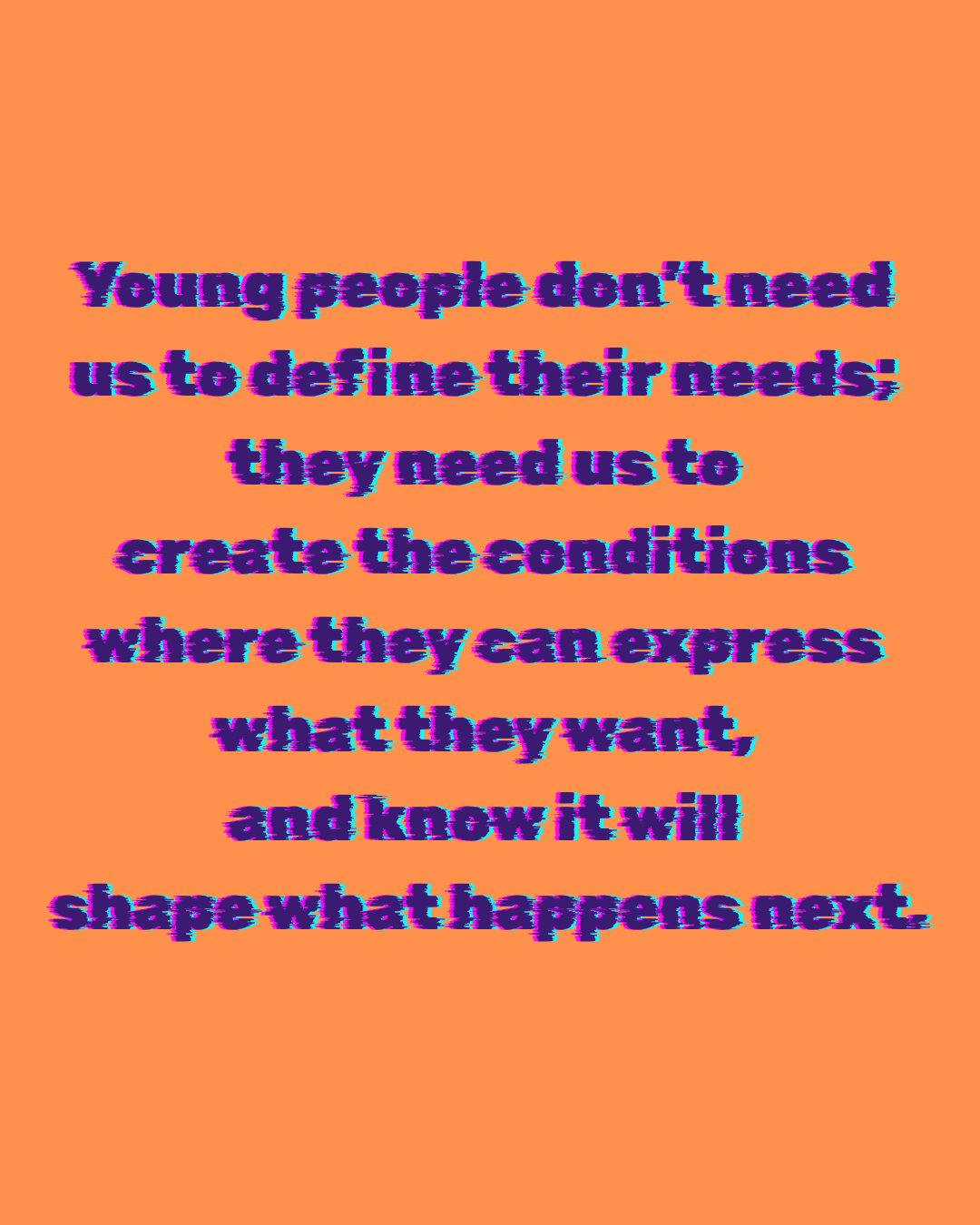
Speaking recently with Paul Stepczak, a co-design practitioner based in Wales, I began to think more deeply about a distinction he had highlighted: the difference between responding to ‘needs’ and responding to ‘wants.’ As Paul explained, ‘needs’ are often interpreted by adults, professionals, and systems—shaped by data, policy, and experience. But ‘wants’ can only be articulated by young people themselves. He noted that when we design around projected needs without understanding lived wants, we risk building services that are technically correct but practically irrelevant.
Paul described how, in his work, young people are not just invited into conversations, they are positioned as equal contributors. He shared an example with me, where a 14-year-old sat alongside civil servants and senior leaders, not as a token voice, but as someone shaping the direction of the discussion, grounded in the mantra: “everyone has something of value to offer.”He explains that it’s about creating an environment where people feel comfortable enough to speak and confident that what they say actually matters.
But perhaps the most important lesson he shared is this: inclusion doesn’t happen by invitation alone, it happens by design. If we want young people to contribute meaningfully, we need to create the conditions where they can, with spaces that feel relevant, accessible, and worth their time. That means rethinking language, format, power dynamics, and expectations. It means moving meetings into community spaces (perhaps spaces that young people frequent), using creative, out-of-the-box ideas and participatory methods, and making it clear that their input leads to action and shapes real outcomes.
But these considerations need to become the norm rather than the exception. It’s not rocket science, so why does it remain so difficult? Why are young people still so rarely included in research and decision-making spaces? Of course, privacy and safeguarding matter but surely we are capable of designing environments where young people can contribute safely, and where their voices are not just heard, but genuinely valued?
There are some optimistic signs. In the UK, more young people are being included in conversations about the work that affects them, and co-production is slowly becoming the norm rather than the exception. The fact that we are talking about it, challenging old ways, and trying new approaches is a clear sign that we are on the right track. The focus on co-production and youth voice isn’t unique to the UK. Around the world, from youth councils in Scandinavia and the Netherlands, to peer-led initiatives in the United States, and co-designed programs in Australia and Canada, young people are increasingly recognised as partners in shaping the decisions that affect them. While each country approaches it differently, the underlying principle is the same: young people should be valued collaborators, not just recipients, and the growing global conversation shows that we are moving in the right direction.
It sounds so easy to be put co-creation and co-production into effect, and yet young people are still often loath to get involved. Maybe it’s because they don’t feel comfortable sharing their opinions, maybe they find the whole idea boring, maybe they don’t have enough time, or maybe they are just not that bothered. It’s probably a mix of all those factors. There are token young people who step up as advocates, but are they representative of the majority? What does it mean when its always the same people turning up to share the perspectives of the youth? Youth is not a monolith: experiences differ by age, gender, region, ability, and family background. 1-in-3 young people feel like they don’t know how to influence decisions taken in their community and half of all young people in the UK feel that their voice doesn’t matter.*** That speaks volumes.
So how do we support the majority?
How can we reach them?
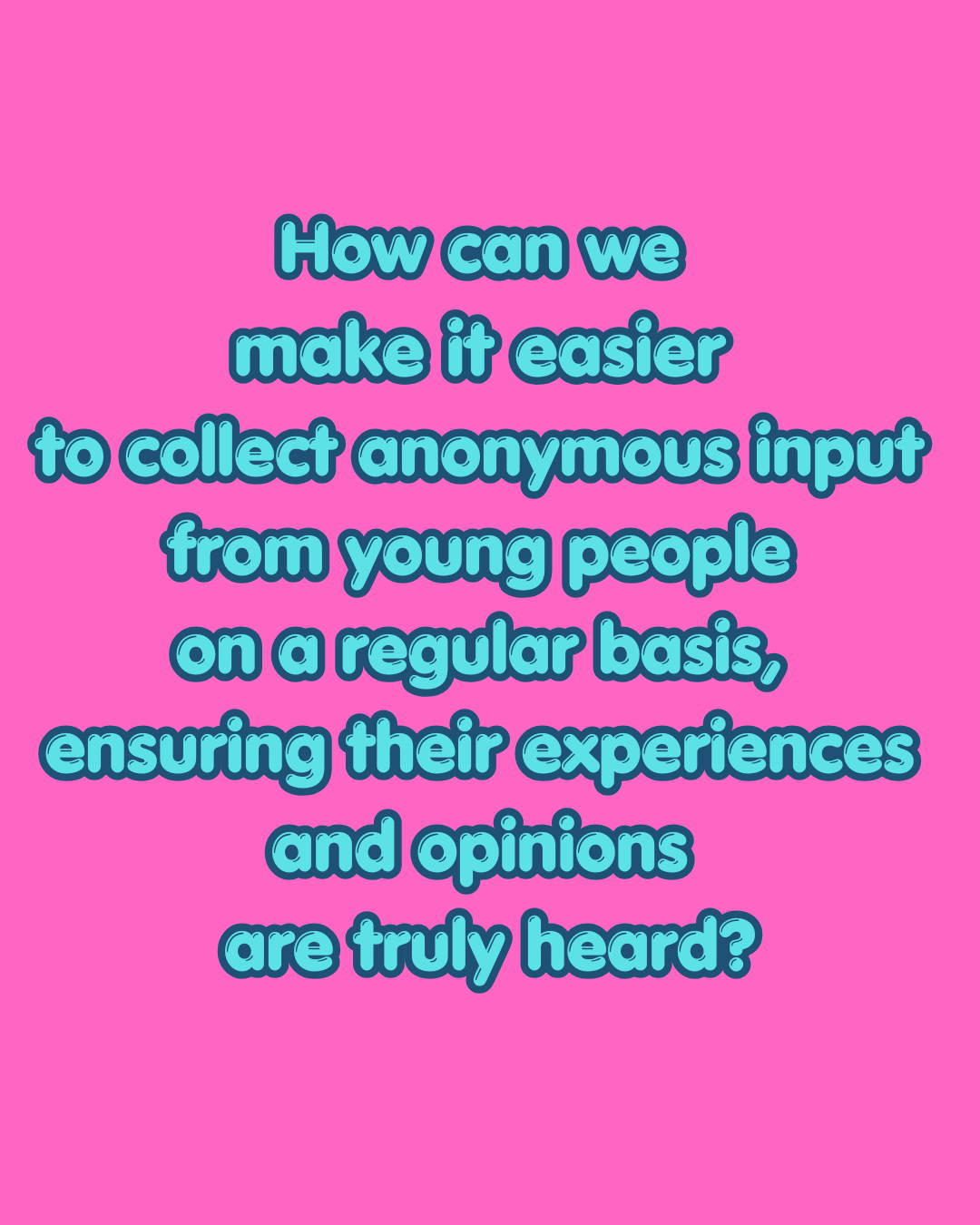
As a mother, I often have to twist my older kids’ arms to get them involved in anything outside their social circles. Yet their voices are crucial, and their insights can, and should have a real impact on their future. We can’t build solutions if we don’t fully understand the problems. We need to encourage active participation at an earlier age, find ways to embed this in schools, and attach real value to their contributions so that sharing perspectives becomes an accepted and integrated norm. We need to embed citizenship, debate, and decision-making skills in schools. And as adults we also need to pave the way, and normalise collective engagement. Youth participation also extends to the ballot box and the civic responsibility it entails. Currently, less than half of young people in the UK, aged 14 to 24, say they are likely to vote in the next general election.**** Maybe its about considering how we can make it easier to collect anonymous input from young people on a regular basis, ensuring their experiences and opinions are truly heard?
Adults often set the agenda, in schools, councils, and public programs. But when adults learn to facilitate rather than gate-keep, thats probably where the most meaningful insight can be gleaned. We need more accessible courses for teachers, youth workers, and community leaders teach skills like active listening, co-design, and avoiding tokenism, empowering us to be able to confidently engage youth in a meaningful way for everyone. In schools, there is definitely a need for more student-led projects but with adult teachers and mentors who are trained in co-production. Local councils can also include youth more in consultations, supported by facilitators who ensure their voices translate into real impact. And community centres can run intergenerational workshops where outcomes are designed together, not imposed from above. The possibilities are endless.
So to conclude, do we really know what matters for our youth?
What does the world look like through their eyes?
And where do they have insight that we don’t?
What can we learn from them?
Aren’t we ultimately missing out on so much if we don’t ask?!
If we yearn for a better connection with youth, (which of course we do!) then we’d better stop assuming, start listening, and then come up with tangible, realistic ways to get them involved….and in ways that they genuinely want to be a part of.
References:
*https://www.un.org/development/desa/youth/what-we-do/faq.html
** R.Raeside, A. R.Todd, S.Jia, et al., “Adolescent Involvement in Co-Authoring Peer Reviewed Publications: A Reflection of Challenges and Best Practice Recommendations,” Health Expectations29 (2026): e70597. https://doi.org/10.1111/hex.70597
***https://www.gov.uk/government/publications/youth-matters-state-of-the-nation/youth-matters-state-of-the-nation
****https://www.gov.uk/government/publications/youth-matters-state-of-the-nation/youth-matters-state-of-the-nation
