

Why Affluent Neglect is Making a Digital Comeback.
“It is easier to build strong children than to repair broken men.”
Frederick Douglass
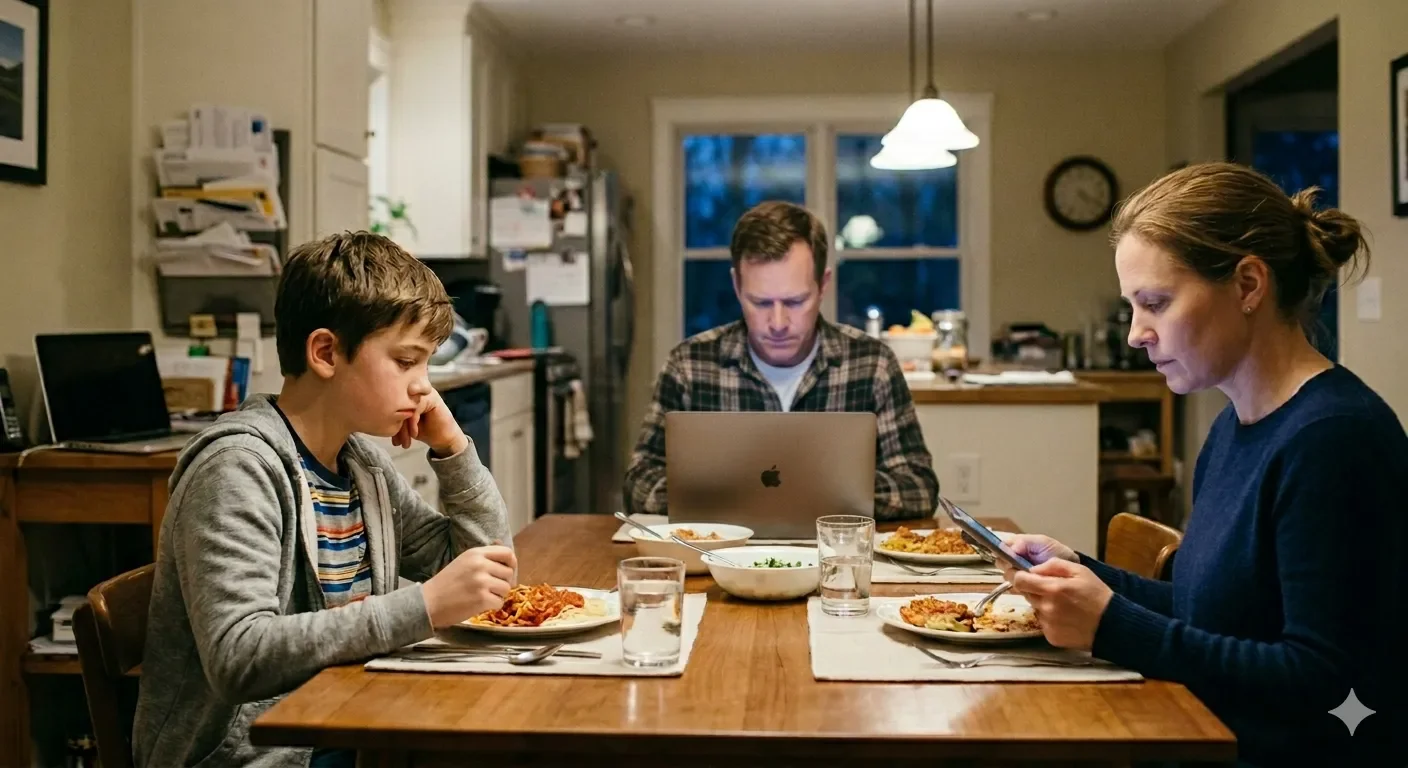
Affluent neglect is what happens when a child has everything except the one thing they actually need: to feel seen. It is the neglect that hides behind school fees, packed schedules and material possessions, invisible to the outside world, but deeply felt by the child inside it.
It’s not about poverty. It is not about absence in the physical sense. It is about the quiet withdrawal of attention from children by parents who are present in every material way, and emotionally, somewhere else entirely.
To understand affluent neglect, we need to go back to its roots. For most of history, only the very wealthy, the nobility, the landowners, the elite, could afford to pay someone else to raise their children. Wet nurses, governesses, nannies. But the Industrial Revolution changed all of that. It created wealth on a scale never seen before, giving rise to what we might call modern affluence.
Before the Industrial Revolution, raising a child was a collective effort. Family life was rooted in community, neighbours, friends, extended family all played a part. Nobody hired help because nobody needed to. The village was the help. It was not outsourced. It was not transactional. It was just life.
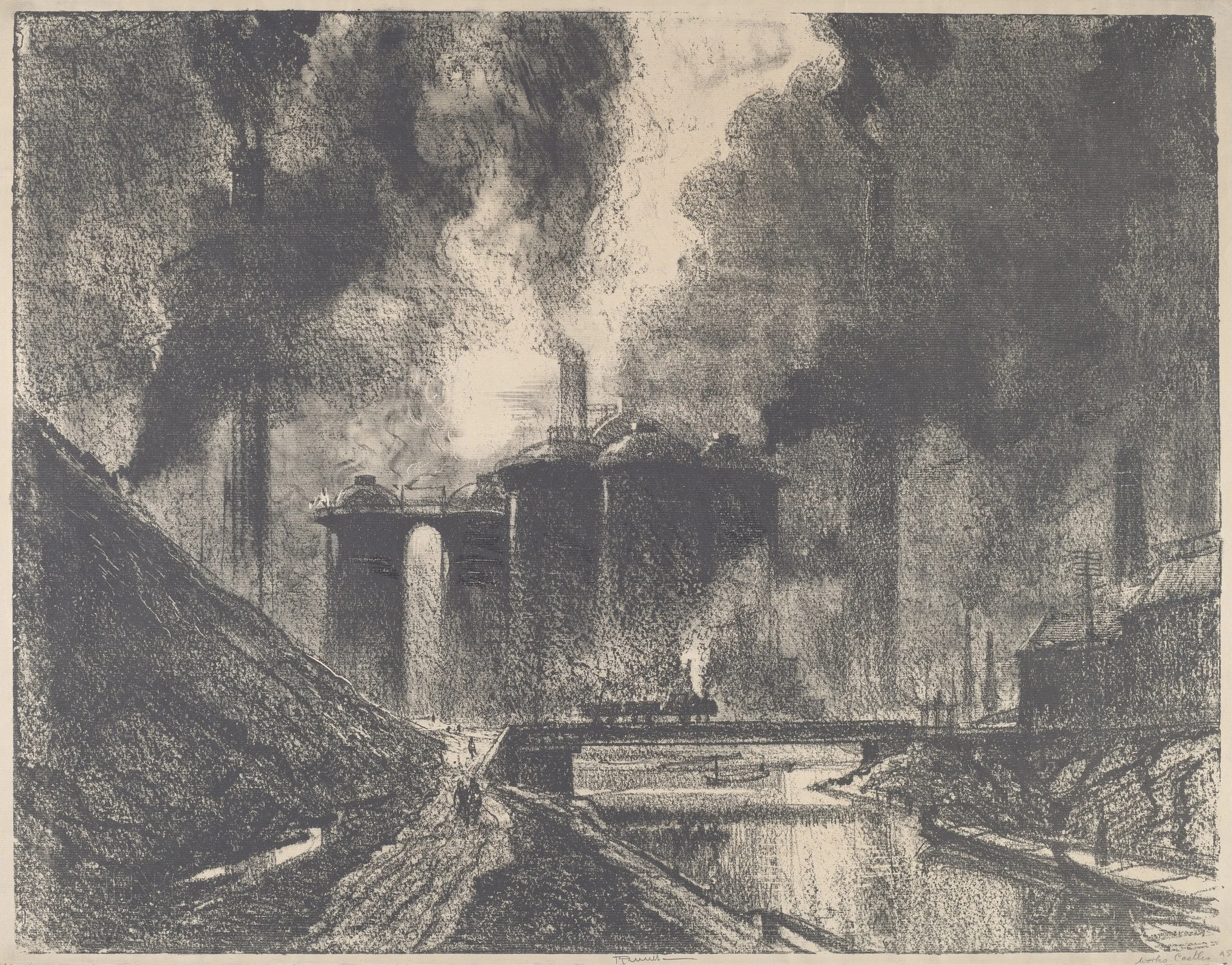
The Industrial Revolution was the turning point that ultimately destroyed the collective village. Home was no longer a place of production, and with that, the family lost its function as a unit that worked, lived and raised children together.[1] Life split into two distinct worlds: work and home. And they were no longer in the same place, “the factory (had) replaced the cottage.”[2]
This was the moment the daily commute was born. Cities were deliberately redesigned to separate the places where people worked from the places where they lived. The working wage arrived with it and along with it, an idea that has never really left us: that time is money. Suddenly, every hour had a price. And time spent simply being with your children had none.

The gender divide was nothing new. But the Industrial Revolution made it lonelier. The village was gone. Extended families were scattered. And so the burden of raising children landed squarely on mothers, with paid help as the only release valve available. What had once been relational became transactional almost overnight. For the wealthy, a nanny was a mark of status. For the poor, finding someone to watch the children while they worked the factory floor was simply survival, there was no choice in it at all. This was the moment childcare became a commodity. And the language shifted with it. Not a carer. A minder. Someone to keep an eye on the child, rather than care for them.
Photo by Ricardo Díaz on Unsplash
As the 19th century moved on, a new class of wealthy people began to emerge, the nouveau riche. Factory owners, merchants, self-made men who had accumulated wealth rapidly and were determined to distinguish themselves from those below them. By the late Victorian and Edwardian eras, Britain was at the height of its Empire, and across the Atlantic, America was deep in its Gilded Age, all surface glitter and underlying tension. Appearance had become everything. And as disposable income grew, society moved further and further from the intimate, communal bonds that had once held people together, towards a world increasingly shaped by institutions, corporations and formal systems.
In affluent households, this shift became physical. Children were separated from their parents, housed in nurseries, on upper floors, brought out at scheduled times and returned when the visit was over. They ate apart. The rule was simple and widely understood: children should be seen and not heard. Emotionally contained, perfectly presented, never troublesome. Victorian experts did not just tolerate this arrangement, they recommended it, arguing that separation from parents was essential to building moral character. The stiff upper lip was not simply a cultural habit. It was a parenting philosophy. The nanny or governess became the dominant figure in a child’s daily life. And because she could be let go at any moment, children came to understand, without anyone ever saying it directly, that love was unreliable and attachment was dangerous.
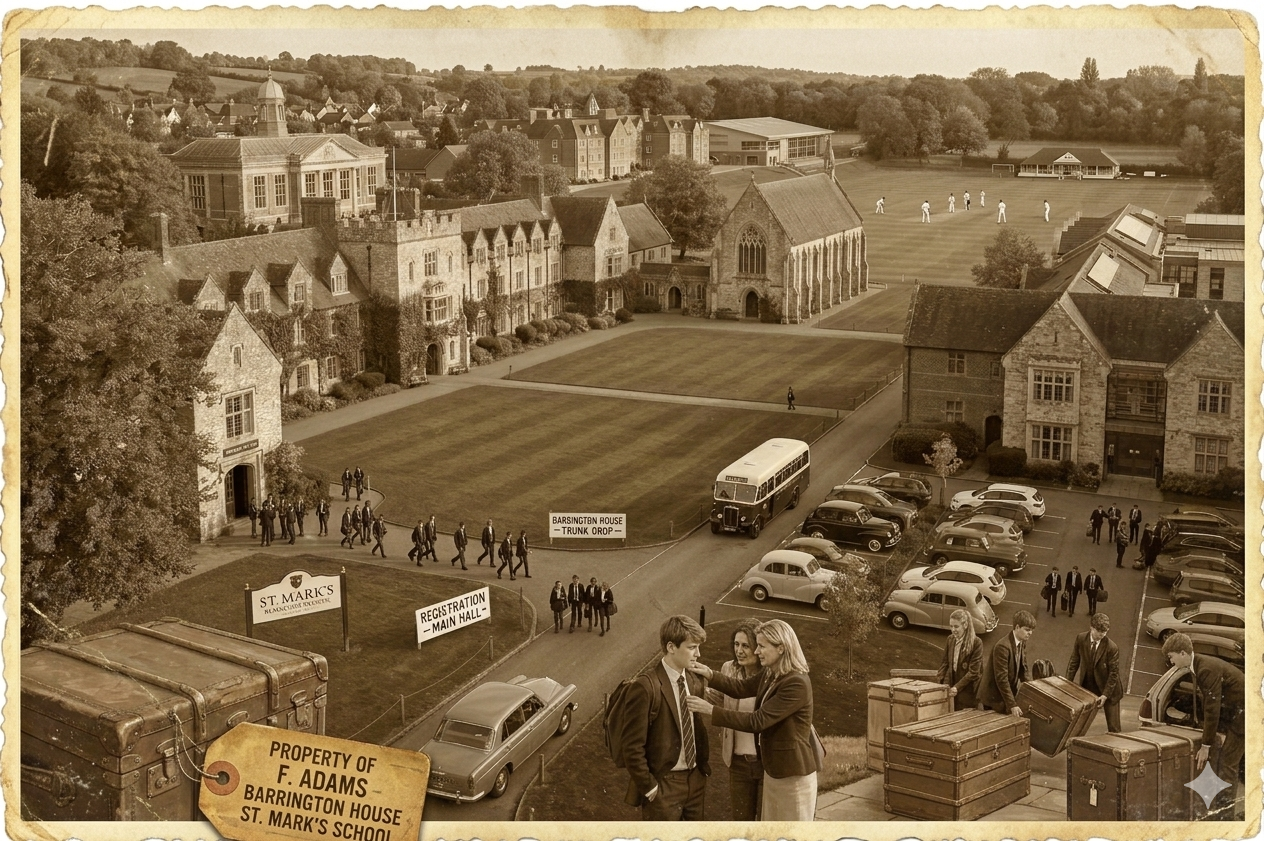
Boarding schools took this separation to its furthest extreme. Children were dispatched at very young ages, my own grandfather was put on a boat from Mauritius to England at the age of five, and my mother was sent a generation later at the age of 7. These were not rare exceptions, but were part of a system that considered this entirely normal. The face-to-face warmth of a family home was traded for the impersonal routines of an institution. And we must ask the question honestly: how could children raised this way, handed first to a nanny, then shipped off to a boarding school not grow up emotionally cut off from the people who were supposed to love them most?
Worse still, boarding schools were often places where cruelty flourished quietly behind closed doors. Bullying, harsh punishments, abuse. The damage was real and it was deep. But it would take a long time and a great deal of suffering, before anyone was willing to name it. It was not until the First World War that the emotional cost of this upbringing finally became impossible to ignore.
W.H. Rivers was a doctor treating officers suffering from shell-shock and he noticed something deeply uncomfortable, that men most likely to break were often those from the most privileged backgrounds. Their affluent upbringings, the nannies, the boarding schools, the emotional containment, had not prepared them for suffering. It had simply taught them to repress it. And repression, Rivers discovered had its limits.[3]
It was the novelist Samuel Butler who finally gave this a name, in his novel The Way of All Flesh. [4] One of the main characters is a father who mistakes cold discipline for love. Through fiction, Butler exposed what affluent families refused to examine: that beneath the wealth, children were not being nurtured. They were being managed. The novel was so recognisable, and so damning, that Butler chose not to publish it during his lifetime.
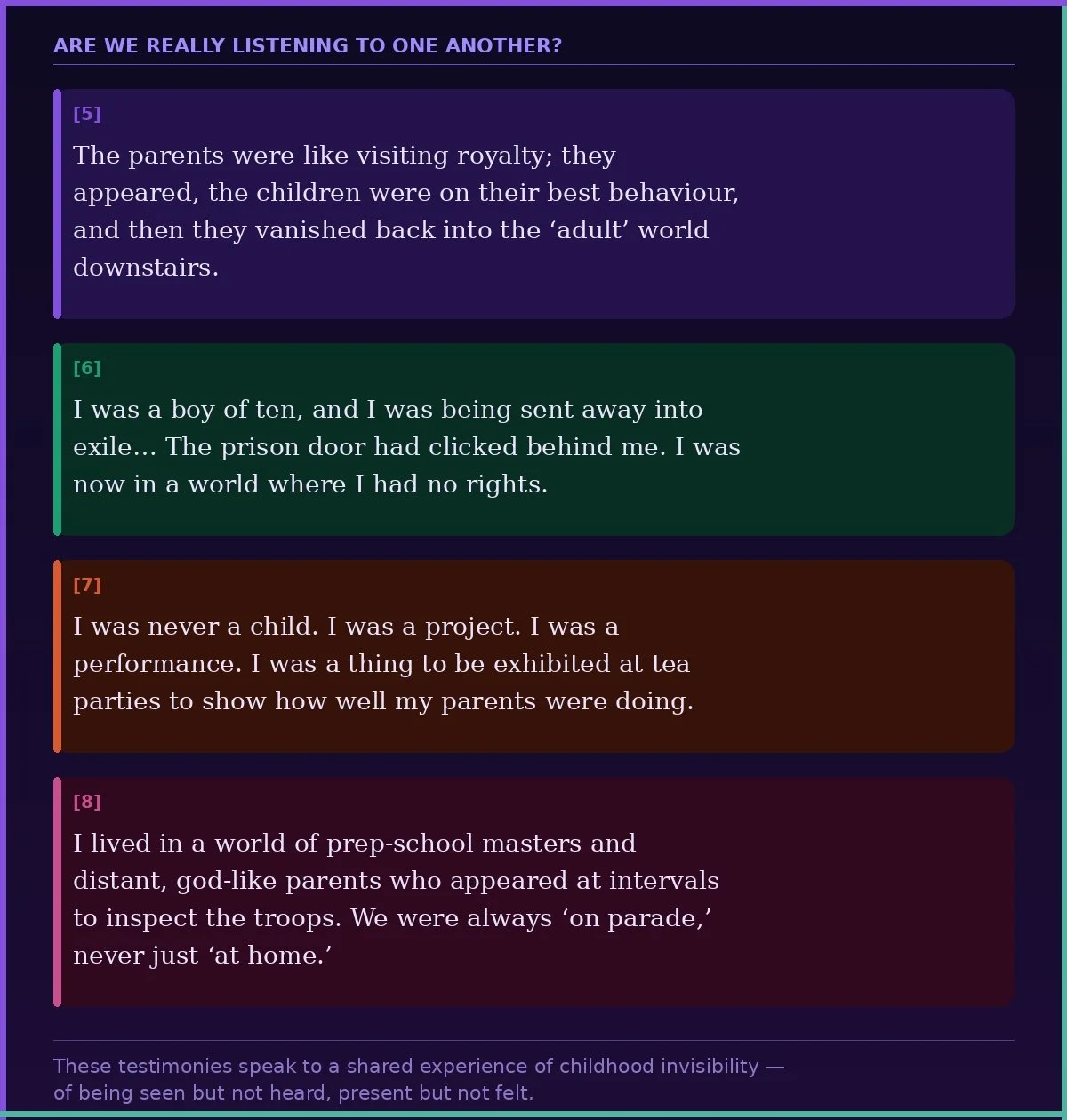
By the mid 20th century, personal accounts began to echo this reality:
It was not until 1951 that science caught up. John Bowlby, commissioned by the WHO, published Maternal Care and Mental Health,[9] ,[9] a landmark report built on one simple, radical idea: that children need a consistent emotional bond. A secure base. Without it, the damage was real and it lasted. His findings forced the British government to reconsider childcare entirely. Separation, he argued, was a very serious matter:
“It is quite possible for a child of any age to feel sad or upset at having to leave home, but the point that we wish to make is that such an experience in the case of a little child can mean far more than the actual experience of sadness. It can in fact amount to an emotional “black-out” and can easily lead to a severe disturbance of the development of the personality which may persist throughout life.”[10]
Bowlby’s work slowly changed things. Institutional care was reformed. And in 1989, the Children Act enshrined something that had never existed before in British law, the legal right of a child to have their wishes and feelings taken seriously. Not as a courtesy. As a mandate. For the first time, listening to children was not optional.
Bowlby did the research. It was acknowledged. It was finally legislated. And then we handed our children a screen….

Digital neglect is perhaps the most insidious form of affluent neglect yet. It requires no nanny, no boarding school, no grand estate. It is available to almost everyone. And it allows parents to be physically present and emotionally nowhere, outsourcing their child’s inner world to an algorithm that does not love them.
The village we lost in the Industrial Revolution has never been rebuilt. Instead, communal belonging has been replaced with individual performance. We are all in the house and yet we are all in separate rooms.
While the Victorian nanny was often a figure of discipline, she was at least a physical presence, a real human witness to a child’s daily life. Today we have replaced that presence with something altogether more abstract. We monitor our children tracking their location by GPS, checking their academic progress through school apps, receiving notifications about their every move. And yet this surveillance is increasingly devoid of genuine human interaction. There are, of course, real benefits to all of this. But we must ask ourselves an honest question: are we in danger of watching the data point rather than seeing the child standing right in front of us?
This disconnection is most visible in the moments that are supposed to be about connection. At school plays and birthday parties, a sea of glowing screens stands between the parent’s eyes and the child’s face. We are so busy documenting the moment for the digital world that we forget to actually be in it. As John Bowlby warned, the “emotional black-out” occurs when the child looks for a secure base and finds only an “impersonal” vacuum. In our modern world, that vacuum is the back of a smartphone.
The Industrial Revolution gave us the idea that time is money. We believed it then and we believe it now. But the digital age is forcing a reckoning. Wealth cannot buy back what children have always needed most. To be truly seen. To be genuinely heard. No app exists for that.
This culture of individualism serves no one. It leaves our children perfectly lonely and parents successfully exhausted. What children need has never really changed. We all need face-to-face warmth, and we have been quietly trading it away since the factory replaced the cottage.
To build strong children rather than repair broken men, we have to be honest. We are all struggling to get the balance right. Not just parents. All of us. The exhausted parent, the overwhelmed teacher, the distracted friend, none of us are failing the people around us out of indifference. We are running on empty with nobody to help. Our devices have become the easiest solution when we need a break or a moment of quiet. We have built a world that isolates people, strips away community, and then acts surprised when nobody is truly present for anybody. If we want things to be different, we have to show up for each other. Not just our own families. The ones next door too.
Screens are here to stay. But our children’s childhoods are not. They are brief and they are passing and they deserve intentional attention.
Our children are not waiting for another club, another tutor, or another screen. They are waiting for us. Present. Listening. Here.
Because the new currency isn’t money.
It’s genuine connection.

Photo by Marina Abrosimova on Unsplash
References
[1] Cohen, M. (n.d.). Changing perceptions of the impact of the industrial revolution on female labour. Simon Fraser University. https://www.sfu.ca/~mcohen/publications/labour/Changing%20Perception.pdf[2] Allen, R. C. (2024). Technical change, globalization, and the labour market: British and American experience since 1620. Oxford Open Economics, 3(Supplement_1), i178–i211. https://doi.org/10.1093/ooec/odad033[3] Rivers, W.H.R. (1920). Instinct and the unconscious. A contribution to the biological theory of the psycho-neuroses. Univ. Press[4] Butler, S. (1903). The Way of All Flesh. London: Grant Richards.[5] Gathorne-Hardy, J. (1972). The Rise and Fall of the British Nanny. London: Hodder & Stoughton.[6] Lewis, C.S. (1955). Surprised by Joy: The Shape of My Early Life. London: Geoffrey Bles.[7] Sitwell, O. (1945). Left Hand, Right Hand! London: Macmillan & Co.[8] Cyril Connolly, Enemies of Promise (London: Routledge & Kegan Paul, 1938), p. 164.[9] Bowlby, J. (1951). Maternal Care and Mental Health. World Health Organization Monograph Series, No. 2. Geneva: World Health Organization.[10] Bowlby, J. (1939). The Psychology of Evacuation. (BBC Radio Broadcast/Lecture).